
{{ p.title }}
{{ b.text }}
{{ g.text }} {{ g.text }} {{ g.text }}
| {{ c.v }} |
|---|
{{ b.note }}
{{ p.kfImg.note }}
Endowment comparisons work when the reporting labels stay with the numbers. The directory uses the FY2025 NACUBO respondent table for size ordering. Institution profiles can use newer official releases and explain their portfolio scope. These questions address the differences that most often affect a reading of an annual report or a size list.
The size lists sort respondents by FY2025 market value in NACUBO's published table. That common-year source makes the order reproducible. It includes U.S. and Canadian institutions and affiliated organizations that volunteered to participate. A university's later official report can show a newer balance without changing its place in this historical survey ranking. See the top 100 table for the common-year order.
The profile may use a newer fiscal year or a different reporting category. An institution can disclose endowment net assets, the market value of its managed pool or the resources held by a supporting foundation. Those figures can differ even on the same date. Wesleyan's profile, for example, identifies operating reserves invested with its endowment. The label explains what belongs in the total.
No. Closing value also reflects gifts, spending and transfers. A larger balance can follow a large contribution even when the investment return is modest. A smaller balance can follow a substantial distribution. NACUBO distinguishes its change-in-market-value column from investment performance. Percentage performance must come from the institution's return calculation, with its period and fee basis.
Individual gift terms can restrict the activity supported. Money for a named scholarship or academic position does not become unrestricted because the investments are pooled. A board-designated fund has different restrictions from a donor-restricted fund. The financial statements' composition note and spending policy explain those distinctions. A headline total does not measure unrestricted cash available for the next operating budget.
Only if that is the policy's stated base. Many institutions use a trailing average of several years of values, and others combine prior spending with an asset-based component. Baylor College of Medicine describes a 28-quarter average. Reed describes a 13-quarter average. Their percentages cannot be applied to a different denominator without changing the measure.
The endowment account can authorize support that reaches another account before a department spends it. A distribution can support capital activity as well as operations. Budgeted support is also different from an audited completed-year amount. Holy Cross' FY2026 summary, for example, separates its full endowment appropriation from the support included in operating results. Its profile preserves those labels.
It compares the institution's sourced return with NCSE's size-band average for a matching horizon and ending date. The FY2025 NCSE return table covers periods ending June 30, 2025 and is net of external management fees and expenses. A June 2026 return or an April fiscal year-end covers another period. If matching inputs are unavailable, a numerical comparison would answer a different question.
No. A size-band mix summarizes survey respondents. It is useful for seeing the average reported exposure of a group, while the institution's own allocation requires a dated source. Targets are different from actual weights. The profile graphics label those bases and identify rounding differences. A 100% total confirms completeness of the displayed categories; it does not establish that two portfolios hold the same investments.
The survey table converts Canadian institutions' values to U.S. dollars under its published convention. Their official accounts can use Canadian dollars and a March or April year-end. Exchange rates and portfolio scope can affect the apparent difference. McGill and McMaster keep their official currencies and fiscal dates. U.S. June-year-end peer returns are not assigned to their April periods.
The sum can double-count assets. A system total may include interests also reported by a campus, and a foundation can report alongside its university. The directory's totals describe the selected respondent rows, without claiming a consolidated statewide asset figure. The state pages retain each respondent's name and location, while profiles explain separate organizational and investment scopes.
Section 4968, as changed by Public Law 119-21, applies to qualifying private educational institutions. For tax years beginning after December 31, 2025, the law requires at least 3,000 tuition-paying students in the preceding year, with more than half located in the United States, and student-adjusted endowment of at least $500,000. State colleges and universities described in Section 511(a)(2)(B) are excluded. Supporting organizations require their own legal analysis under the related-organization rules.
The rates on net investment income are 1.4% for student-adjusted endowment from $500,000 through $750,000, 4% above $750,000 through $2 million, and 8% above $2 million. The base uses assets other than those used directly for exempt purposes and the law's student-count rules. The profiles assign an institutional tier only where an institution discloses it. A survey balance alone does not establish liability or a rate.
A Form 990 record can identify a legal filer and provide its assets, revenue and expenses for the filing period. Those amounts are often broader than endowment investments. A foundation and a public university can have separate tax identifiers, and public universities may have different filing obligations. ProPublica's structured nonprofit records are used with the named filer and tax period attached. They do not replace the institution's endowment report.
The directory links the individual reporting cases. The glossary defines the accounting and investment terms used in those profiles.
Sources for reporting and tax conventions: NACUBO respondent notes, NCSE return table, NCSE spending table and Enacted private-college tax provisions.

The #1 most in-depth guide to endowment funds with in-depth profiles, infographics, resources, and research
I started Family Office Club 19 years ago. I would rather build a real relationship than sell you something. I am not a broker. I am not a bank. I do not charge for anything on this site.
Endowments are some of the most studied investors in the world, and the numbers are scattered across financial reports, press releases and student newspapers. This site puts each endowment's figures in one place, from its own reports first, names every source, and says plainly when a number has not been published.
We run 16 in-person events a year, 4 Super Summits and 12 masterminds, in NYC, Fort Lauderdale, Dallas, Los Angeles and Beverly Hills. 300 of them over 19 years.
"The Family Office Club is unique as a community. The thing I admire about you is that you started with your family, making that a priority."
Todd Heiner · centimillionaire, co-founder of Express Locations
Each fact names its source and its date. When two sources disagree, we show both. When an endowment has not published a number, we say so.
{{ dirIntro }}
| {{ r.type }} | {{ r.loc }} | {{ r.size }} | {{ r.fy }} |
Size is the tracked endowment market value in USD, mostly from the NACUBO-Commonfund Study of Endowments FY2025 public table. Linked names open a full profile with the institution's own latest figures, dates and currency.
| {{ c.v }} |
|---|
| {{ c.v }} |
|---|
| {{ c.v }} |
|---|
| {{ c.v }} |
|---|
{{ guidesIntro }}
This page does not exist or has moved.
Ranked from published profiles only, using each endowment's latest reported fiscal year. The basis and date sit next to every number. {{ stats.queued }} endowments are still in research and will be added as their profiles publish.
| # | Endowment | Country | Value | Return | Fiscal year and date |
|---|---|---|---|---|---|
| {{ r.rank }} | {{ r.name }} | {{ r.country }} | {{ r.value }} | {{ r.ret }} | {{ r.fy }}, {{ r.asOf }} |
Practical guides for raising from, working with and running endowments. Each one is being written now and will publish here, free.
Tell me what you are raising for. I will tell you which endowments look like a fit, and which rooms are worth being in. I read these myself.
Correct it or claim it. It is free. Send the page, the change and a public source, and we will update it and note the date.
For board members, investment committee members, donors, students and journalists. Every profile shows value, return, spending and allocation with the fiscal year and source next to each figure.
Each fact names its source and its date. We start with the institution's own financial report, investment office report and press release, then official filings, then third-party reporting. Figures are tied to a fiscal year, because most endowments report once a year. When two sources disagree, we show both. When an endowment has not published a number, we say so rather than estimate it silently.
To report an error or ask for a change or removal, email Richard@Endowments.com or text (808) 600-9260.
{{ a.a }}
16 in-person events a year, 4 Super Summits and 12 masterminds, plus monthly webinars. Run by Family Office Club.
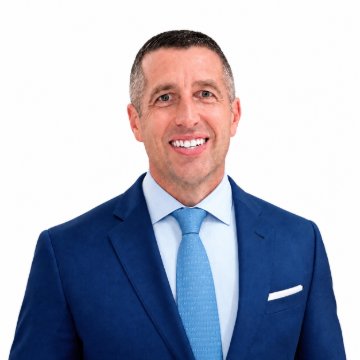
Endowments.com is a research resource on university, college and foundation endowments. It profiles 775 endowments, including university, college, foundation and hospital endowments, built from each institution's own reports and public filings, and runs the Endowments by Size Band benchmark study. Every figure carries its source and date.
I started Family Office Club 19 years ago at 26, as my 12th startup and the first one that worked. All three of my daughters are in the business with me now. My father raised $1 billion for non-profits before I ever started, so I grew up watching this.
Since then: 300+ in-person events, 1,500 investors on stage, 250+ family offices created or formalized, 46 transactions off my own balance sheet, and CIO of a $180M single family office.
I am not a broker. I am not a bank. I do not charge for anything on this site. I built it because endowment figures are spread across hundreds of reports and press releases, and few places put them side by side with sources.
Text or WhatsApp me at (808) 600-9260, or email Richard@Endowments.com.
I'm Richard C. Wilson. I started Family Office Club 19 years ago. I read the messages that come in through this site myself. Text or WhatsApp me at (808) 600-9260, or email Richard@Endowments.com. Thank you.
This page is for general information only and is not investment, tax or legal advice. Figures come from the public sources listed and may have changed.